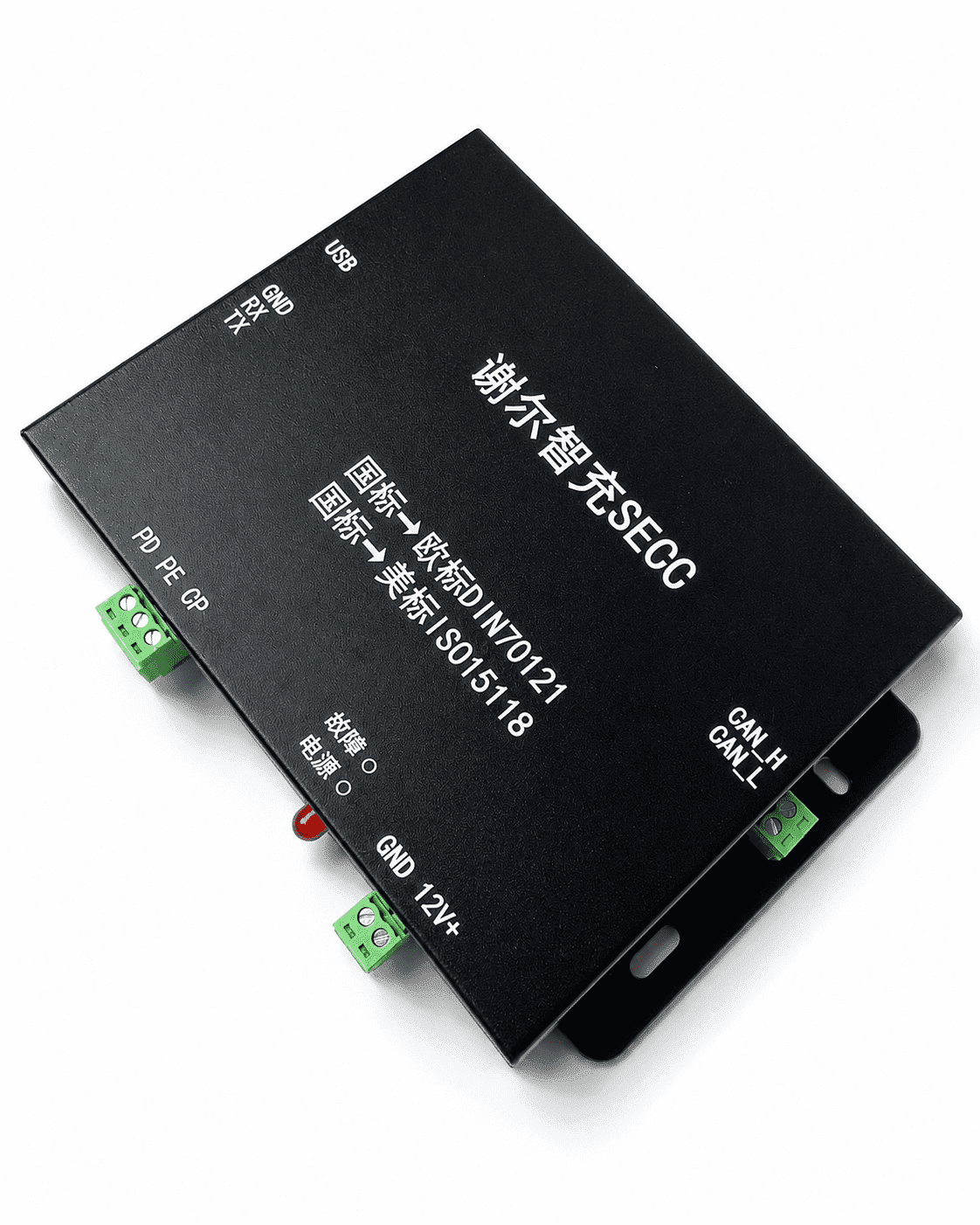
Supply Equipment Communication Controller for CCS Charging
DIN 70121 / ISO 15118 • PLC • CAN 2.0
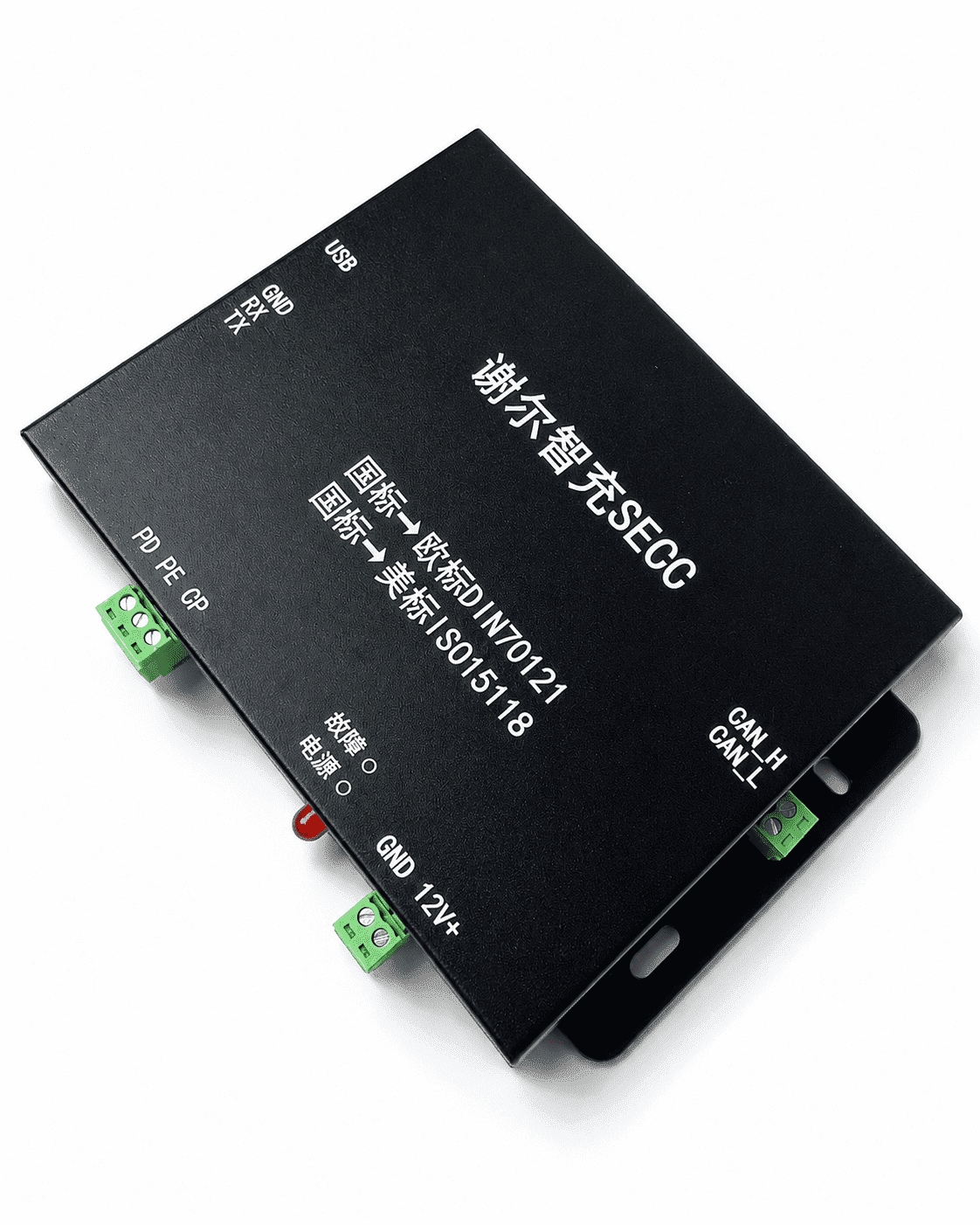
Share Charging’s Supply Equipment Communication Controller (SECC) is installed on the charging station side and provides the communication bridge to the vehicle-side EVCC. It supports PLC communication for CCS charging and interfaces with charger-side CAN control systems.
Designed to support CCS charging communication, controller integration and maintainable firmware.
▣
Vehicle-to-Charger Communication
Provides the charger-side SECC communication interface to the vehicle EVCC using DIN 70121 and ISO 15118 PLC communication.
ϟ
PLC & CAN Interface
Links charger-side CAN communication with the high-level CCS charging communication process. Suitable for integration with compatible CCS1 / CCS2 EVSE configurations.
⚙
Upgrade & Diagnostic Support
Supports USB flash-drive and UDS firmware upgrades, with local firmware upgrade capability and simple RS232 monitoring functions as specified on the original product page.
SECC Communication Architecture
The SECC is located at the charging station and exchanges charging messages with the vehicle-side EVCC through PLC communication.
Vehicle / EVCC
CCS1 / CCS2 communication using DIN 70121 / ISO 15118 via PLC
Charging Station / EVSE
SECC installed on the charger side to coordinate charging communication
SECC Controller
PLC ↔ charger-side CAN communication interface
Main Controller / CAN
CAN 2.0 interface for station-side control integration
Firmware Maintenance
USB flash-drive upgrade, UDS upgrade and local update
Charging Protocols
DIN 70121 / ISO 15118 communication with vehicle-side EVCC
Application Scenarios
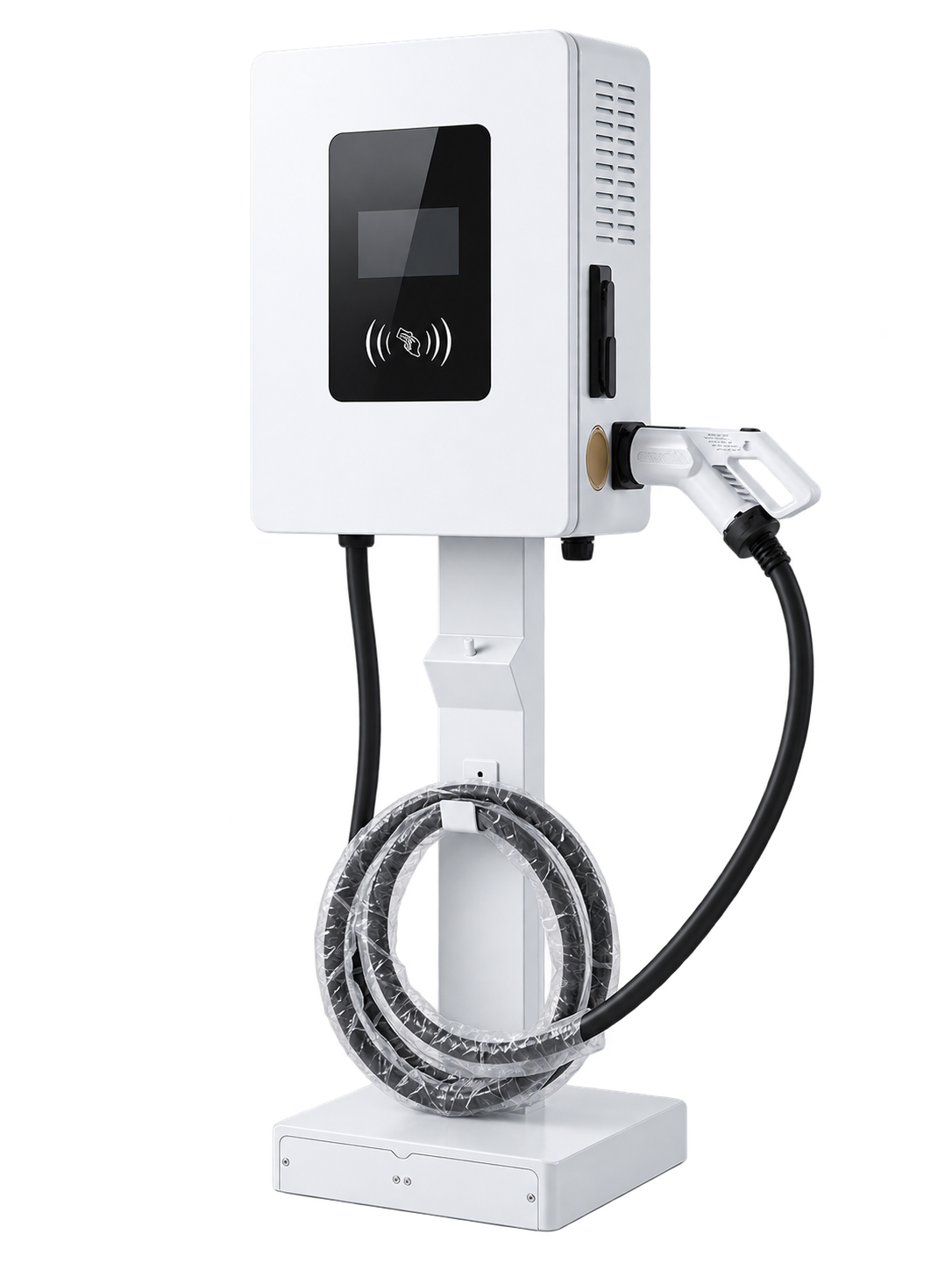
Charger-side communication for CCS-compatible EVSE and engineering integration.
CCS1 / CCS2 DC Charging
Vehicle-to-charger communication for compatible CCS DC fast chargers.
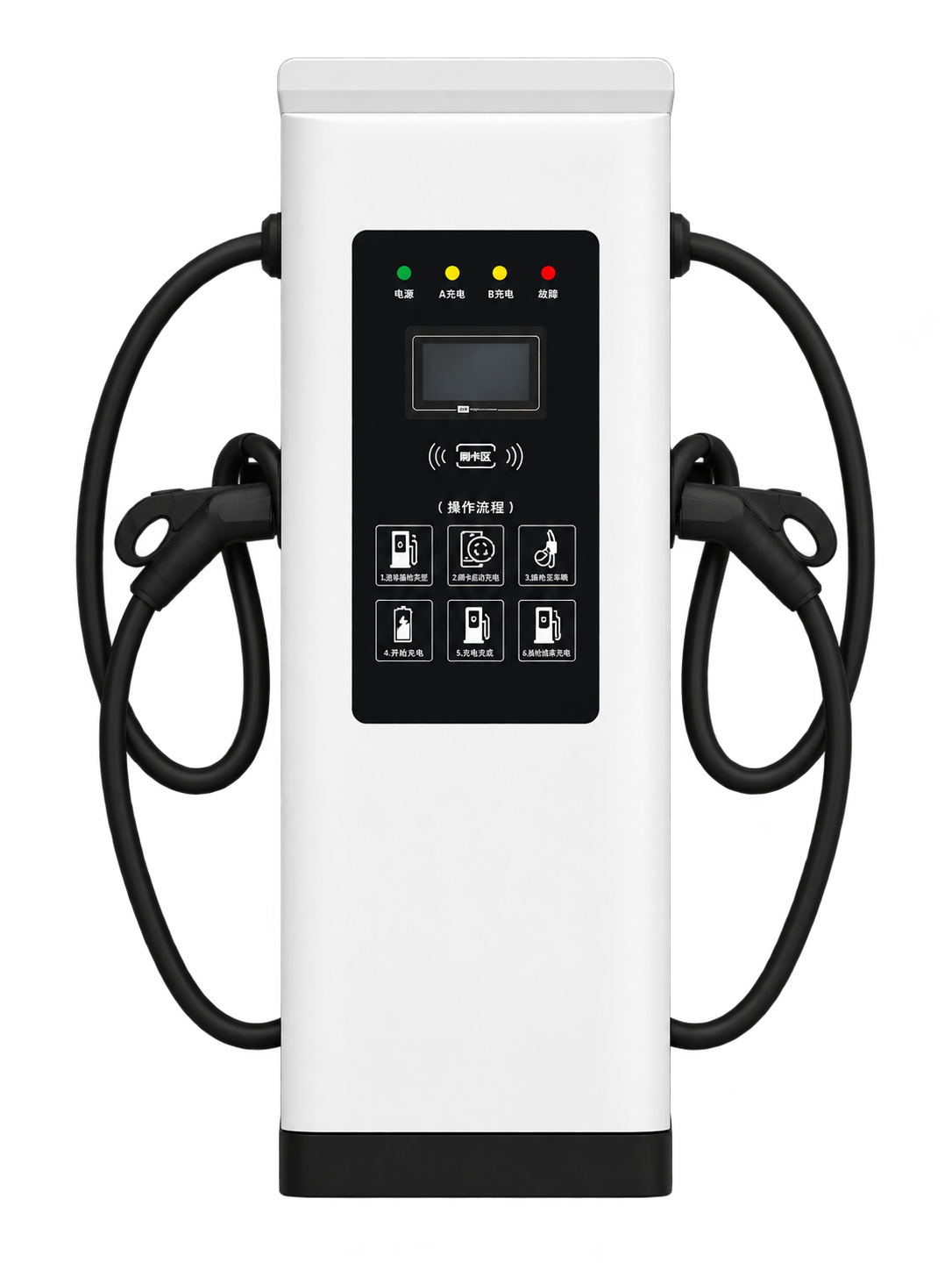
Single- & Dual-Gun EVSE
Each CCS charging connector uses an independent SECC communication channel.
OEM Charger Integration
Integration into charger control systems using CAN, PLC and defined interfaces.
SECC Technical Specifications
Original SECC hardware, communication and operating parameters.
System
Communication
Control & Interface
Compatibility
Environment
Maximum Supported Power
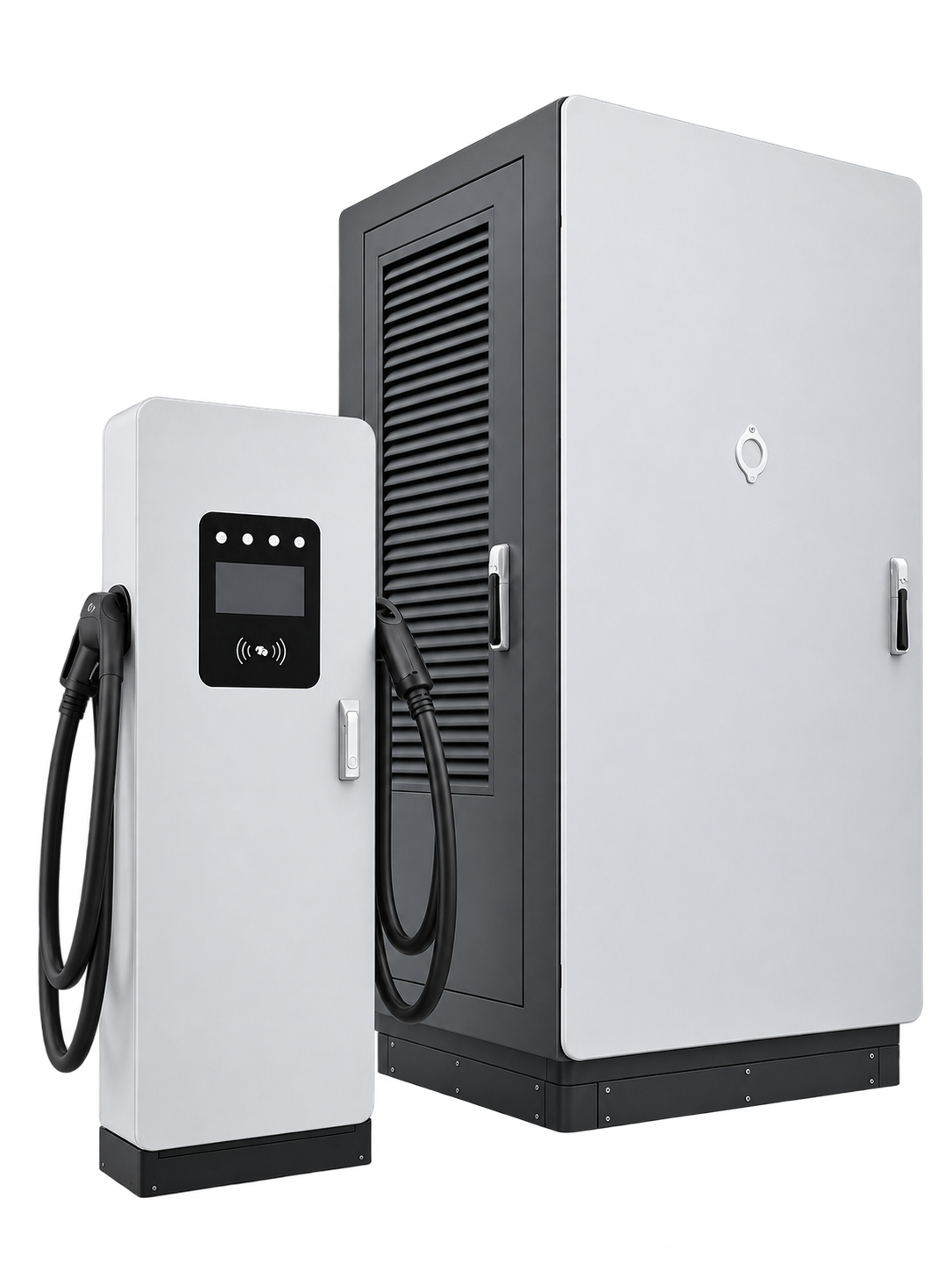
Suitable for DC Chargers of Different Power Levels
Compatibility
Validated with multiple CCS1 / CCS2 EV and EVSE platforms
Protocol Conversion
GB/T, CCS1, CCS2
MCU
STM32
Memory
2 MB
CAN Interface
CAN 2.0 × 1
Basic Functions
USB flash drive upgrade, UDS upgrade
PLC Communication
DIN 70121 / ISO 15118
Input Voltage
DC 9–16 V
Operating Current
<100 mA
Operating Temperature
-40°C to 85°C
Storage Temperature
-55°C to 90°C
Software Upgrade Support
ISO 15118-1/2/3 and EIM message sets (as listed on source page)
Local Upgrade
Supports local firmware upgrade
Control & Monitoring
Supports simple control and monitoring via RS232
Terminal Resistor
Configurable terminal resistor
Application Areas
DC Fast-Charging Stations
Charger-side communication between SECC and EVCC for CCS applications.
CCS Interface Integration
PLC vehicle communication interfaced with station-side CAN control.
Charger Engineering & Testing
Engineering validation of communication with compatible CCS1 / CCS2 platforms.
OEM / ODM EVSE Development
Communication module integration for charger manufacturers and system integrators.
Call Us or Fill the
Form
Whats App:+8615996468708
Don’t hesitate to contact us
Working Time
Mon-Fri: 9:00 - 18:00 / Closed on weekends
Factory Address
Nanjing Headquarters, China
Cairo, Egypt Branch
Riyadh, Saudi Arabia Branch
FREQUENTLY ASKED QUESTIONS
SECC Communication Controller – Frequently Asked Questions
SECC means Supply Equipment Communication Controller. It is installed on the charging station side and manages communication with the vehicle-side EVCC.
The original product specifications list PLC communication for DIN 70121 and ISO 15118. Confirm the required protocol revision and firmware version before ordering.
The original product page describes compatibility testing with multiple CCS1 and CCS2 EV and EVSE platforms. Actual compatibility depends on the complete system configuration.
SECC is the charger-side communication controller. EVCC is the vehicle-side communication controller. They exchange messages during the CCS charging process.
Input voltage is DC 9–16 V, operating current is less than 100 mA, and operating temperature is -40°C to +85°C according to the original specifications.
Each independent CCS charging connector requires its own SECC communication channel. Two single-channel SECC modules or a validated two-channel design can be used.
Integration depends on the charger main controller, CAN interface, charging protocol configuration and testing requirements. Share your controller architecture for a compatibility review.
Contact our team with your connector type (CCS1 or CCS2), target market, charging architecture, requested protocol version and project quantity. We can then discuss the appropriate configuration.