

SHARE CHARGING · TECHNICAL INSIGHTS
Technical Insights | EV Charging Communication | SECC & EVCC | Plug & Charge | V2G
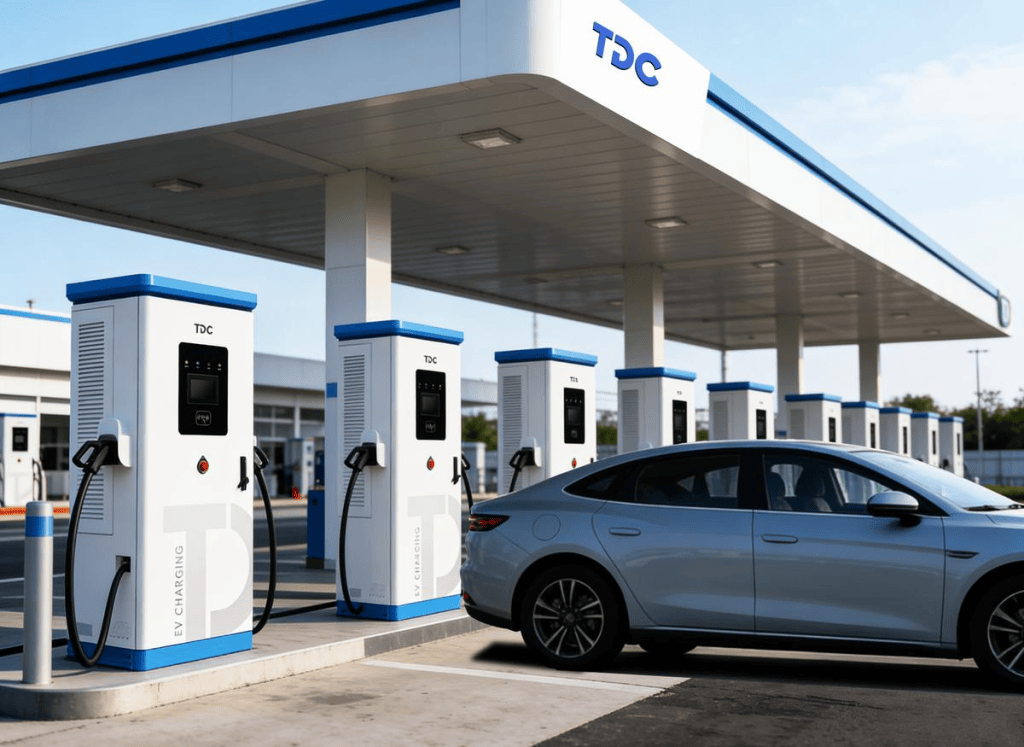
As the global electric vehicle industry continues to expand, charging infrastructure is evolving from conventional power delivery equipment into intelligent energy terminals capable of digital authentication, smart energy management, and bidirectional power exchange.
At the center of this transformation is vehicle-to-charger communication.
ISO 15118 is a key international standard governing high-level communication between electric vehicles (EVs) and electric vehicle supply equipment (EVSE). It defines how vehicles and charging stations exchange charging parameters and provides a standardized communication framework for Plug & Charge (PnC), smart charging, and Vehicle-to-Grid (V2G) integration.
Published in 2014, ISO 15118-2 established the foundation for many early smart charging applications. ISO 15118-20, published in 2022, introduced second-generation network and application layer requirements, including communication mechanisms for bidirectional power transfer, dynamic control, and new automated charging scenarios.
For EV charger manufacturers, SECC controller developers, and charge point operators, understanding the differences between these two generations is essential when planning next-generation charging products.
01. What Is ISO 15118 and Why Do EV Chargers Need It?
The fundamental purpose of a conventional EV charger is to deliver electrical energy safely according to vehicle requirements.
However, as charging power increases and the industry introduces more advanced authentication methods, payment systems, and grid interaction capabilities, basic control pilot signaling alone is no longer sufficient for every communication requirement.
ISO 15118 establishes a high-level communication framework between the Electric Vehicle Communication Controller (EVCC) and the Supply Equipment Communication Controller (SECC).
Through this framework, vehicles and charging equipment can exchange charging capabilities, energy requirements, battery-related parameters, control information, and authentication data.

In a practical charging system, the SECC acts as a communication bridge between the vehicle and the internal charging control architecture.
It works with the charger controller to translate vehicle charging requests into executable operating sequences, while reporting equipment status and responding to communication events.
As a result, upgrading to newer ISO 15118 standards may affect not only communication software but also charging system architecture, cybersecurity design, testing procedures, and long-term maintenance capabilities.
02. Key Differences Between ISO 15118-2 and ISO 15118-20
The following comparison highlights the main differences from the perspective of EV charger development and system integration.
| Comparison | ISO 15118-2 | ISO 15118-20 |
|---|---|---|
| Publication | 2014 | 2022 |
| Standard generation | First-generation application layer | Second-generation network and application layer |
| AC/DC charging | Supported | Supported with expanded services |
| Bidirectional power transfer | No complete standardized BPT message framework | Defines BPT communication mechanisms |
| Smart charging | Supports charging schedule negotiation | Defines Scheduled and Dynamic control modes |
| Plug & Charge | Supported | Enhanced authentication and certificate-related mechanisms |
| Communication security | TLS 1.2-based mechanisms | TLS 1.3-based security requirements |
| Wireless charging | Not a primary application | Includes WPT communication requirements |
| Automatic connection | No complete dedicated application message framework | Includes ACD communication services |
| Protocol architecture | First-generation message structure | Updated service negotiation and dedicated message structures |
| Main applications | Conventional AC/DC charging, PnC, smart charging | Advanced smart charging, V2G, automated energy interaction |
Important: ISO 15118-2 and ISO 15118-20 are not automatically interchangeable through a simple firmware update. Actual compatibility depends on the protocol stack, certificate infrastructure, control interfaces, and hardware resources.
Equipment manufacturers should evaluate these factors before establishing an upgrade strategy.
03. From Unidirectional Charging to Bidirectional Power Transfer
One of the most important developments introduced by ISO 15118-20 is the standardized communication framework for Bidirectional Power Transfer (BPT).
Traditional EV charging primarily follows a unidirectional energy flow, transferring electrical power from the grid through charging equipment to the vehicle battery.

ISO 15118-20 defines messages and procedures enabling the communication required for bidirectional charging, provided the vehicle, charging equipment, and energy infrastructure support the corresponding functionality.
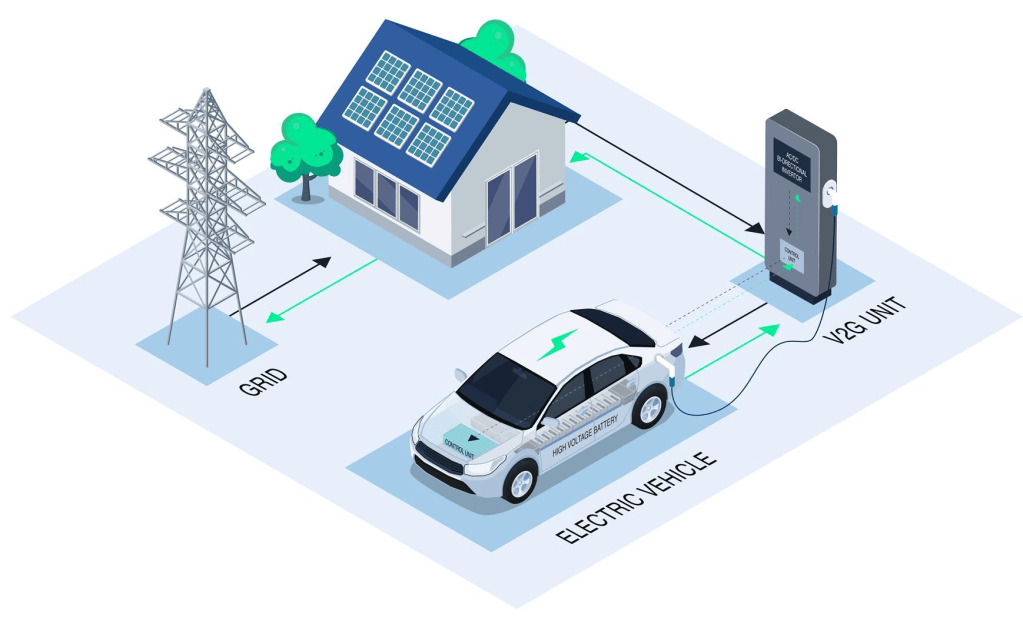
Figure 3. Conceptual illustration of bidirectional EV charging and energy interaction.
V2G — Vehicle-to-Grid
V2G enables an electric vehicle to discharge electricity back into the grid through compatible bidirectional charging equipment. This can support grid services such as load management, peak shaving, and flexible energy dispatch.
V2H — Vehicle-to-Home
V2H allows energy stored in an EV battery to supply household loads when the appropriate bidirectional power conversion, electrical protection, isolation, and transfer mechanisms are available.
V2B — Vehicle-to-Building
V2B integrates EV battery resources with a building energy management system, allowing compatible vehicles to participate in building load optimization and energy management.
It is important to distinguish between communication capability and power conversion capability.
ISO 15118-20 provides the communication foundation for bidirectional power transfer. It does not, by itself, transform a conventional unidirectional charger into a V2G charger.
Practical V2G implementation also requires compatible bidirectional power electronics, vehicle BMS cooperation, electrical protection, energy metering, and compliance with applicable grid interconnection requirements.
For EV charger manufacturers, this creates a stronger need to coordinate communication protocol development with power electronics and control system design.
04. Plug & Charge: Toward a More Advanced Security and Authentication Framework
Plug & Charge (PnC) is one of the most important functions associated with ISO 15118.
In conventional public charging scenarios, drivers typically initiate a charging session using an RFID card, mobile application, or another authentication method.
With Plug & Charge, a compatible electric vehicle and charging station can use standardized communication and digital certificates to support automated identity and contract authentication, reducing the need for manual intervention.

Figure 4. Plug & Charge enables automated authentication between compatible vehicles and charging infrastructure.
ISO 15118-2 already supports Plug & Charge, while ISO 15118-20 introduces updated security and certificate-related mechanisms.
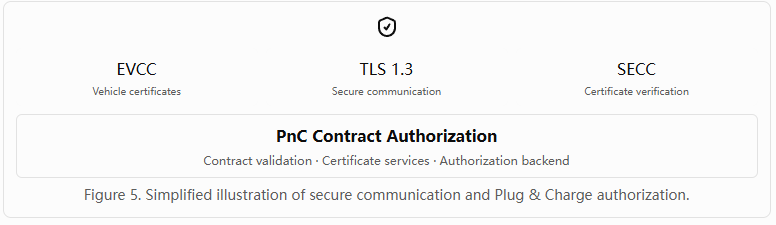
TLS 1.3 and Secure Communication
ISO 15118-20 introduces TLS 1.3-based communication security requirements and associated certificate verification mechanisms.
Compared with the earlier generation, this provides a foundation for a more advanced vehicle-to-charger trust architecture.
However, it is essential to distinguish between TLS security and Plug & Charge contract authorization.
A secure TLS connection protects communication, while PnC authorization involves additional processes, including contract certificate validation and authorization decisions.
More Sophisticated Certificate Management
As public charging networks expand internationally, the certificate ecosystem may involve vehicle manufacturers, charge point operators, mobility service providers, and certificate authorities.
For SECC developers, important considerations include:
- Certificate chain verification and certificate validity management.
- Certificate revocation handling and error recovery.
- TLS connection stability and secure session establishment.
- Coordination between PnC authentication and charging control.
- Integration with external certificate management and charging backend services.
These functions generally require cooperation between the software protocol stack, embedded security mechanisms, and external platform infrastructure.
05. Smart Charging Evolution: Scheduled and Dynamic Control Modes
Electric vehicle charging is gradually moving away from fixed power delivery toward more flexible energy management.
ISO 15118-2 already provides smart charging capabilities, including charging schedule negotiation.
ISO 15118-20 further develops this framework by defining two important control modes: Scheduled Control Mode and Dynamic Control Mode.
Scheduled Control Mode
In Scheduled Control Mode, the vehicle and charging equipment negotiate a charging schedule based on available power, vehicle energy requirements, and relevant operating constraints.
The negotiated schedule can coordinate charging activities over multiple time intervals.

Scheduled control is useful when energy availability, charging costs, and vehicle departure times can be considered in advance.
For example, a charging facility may coordinate EV charging with anticipated solar generation, battery storage availability, or time-of-use electricity pricing.
Dynamic Control Mode
Dynamic Control Mode supports more frequent adjustments to power transfer parameters according to changing operating conditions.
This mode is particularly relevant when the available charging capacity is subject to real-time variation.
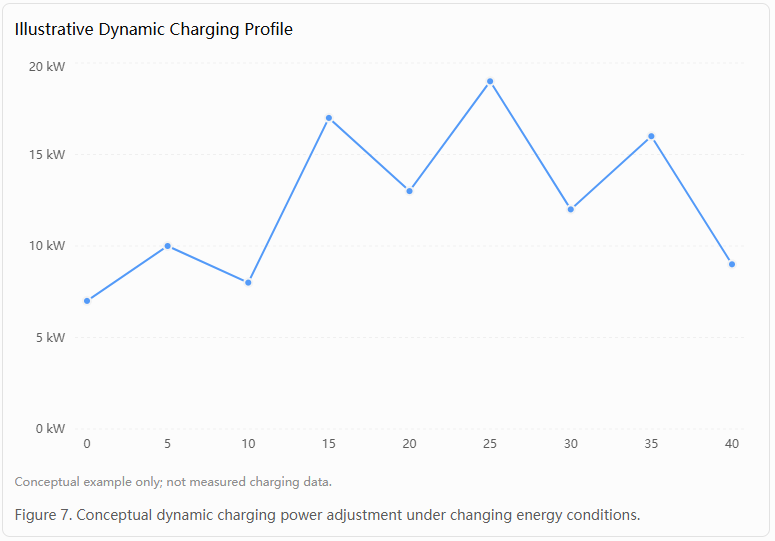
Potential applications include charging stations integrated with photovoltaic systems, battery energy storage, and dynamic site-level load management.
It should be emphasized that ISO 15118 addresses vehicle-to-charger communication.
Complete site-level energy optimization still requires an Energy Management System (EMS), appropriate control strategies, and integration with the charging equipment.
06. Wireless Charging and Automatic Connection Technologies
Charging automation is becoming increasingly important for electric buses, commercial vehicle fleets, logistics applications, and future autonomous mobility systems.
ISO 15118-20 includes communication requirements for Wireless Power Transfer (WPT) and Automatic Connection Devices (ACD), expanding the application scope of advanced EV charging communication.
Wireless Power Transfer (WPT)

Wireless charging systems transfer electrical energy without a conventional conductive charging cable.
This technology may be suitable for certain automated parking environments and highly automated vehicle applications.
Practical implementation also requires compatible wireless power transfer hardware, positioning or alignment mechanisms, and appropriate electrical safety measures.
Automatic Connection Device (ACD)

Automatic connection devices enable mechanical and electrical coupling between charging infrastructure and vehicles without conventional manual cable connection.
Examples include pantograph-based systems used in electric bus operations and selected commercial vehicle applications.
Such technologies can help reduce manual intervention and support automated fleet charging operations.
However, ISO 15118-20 does not require every charging station to support WPT or ACD.
Manufacturers should select the appropriate communication services according to their target applications, hardware configurations, and market requirements.
07. What Does ISO 15118-20 Mean for SECC, EVCC, and EV Charger Controllers?
From a product development perspective, ISO 15118-20 represents more than the introduction of additional protocol features.
It encourages the development of more capable communication controllers, stronger security mechanisms, and increasingly integrated charging control architectures.
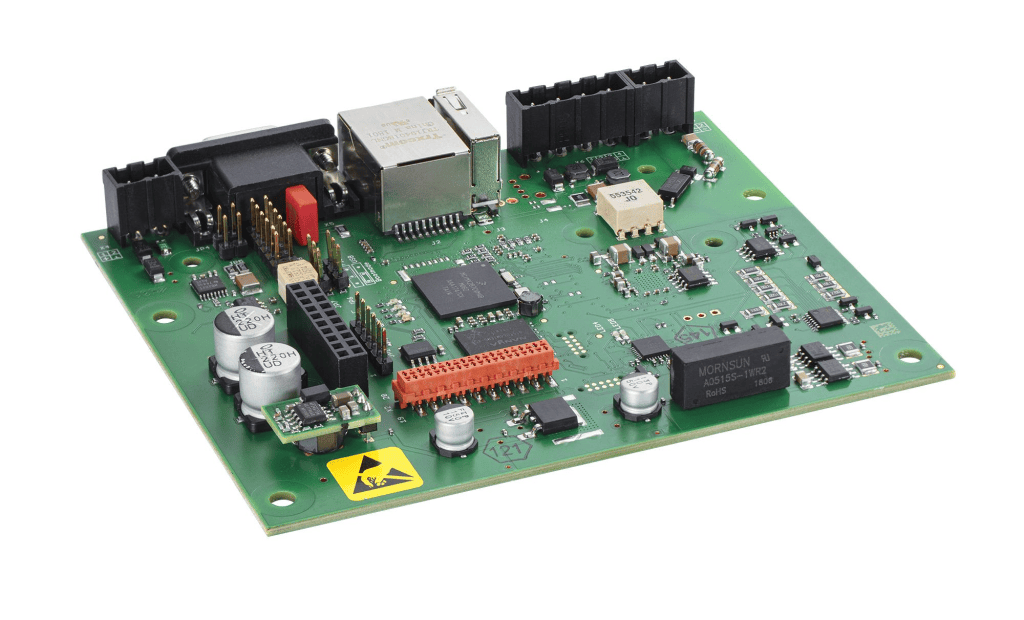
Four areas deserve particular attention when developing next-generation AC and DC charging equipment.
1. Protocol Stack Implementation and Interoperability
Supporting ISO 15118-20 requires implementation of the relevant service negotiation, message processing, charging state transitions, and exception handling procedures.
Simply changing a protocol version identifier is insufficient.
SECC and EVCC developers must ensure that communication behavior conforms to the selected services and protocol requirements.
2. Communication Security and Hardware Resources
TLS 1.3, certificate verification, and secure data processing may affect embedded software architecture and computing resource requirements.
Manufacturers should evaluate processor performance, memory resources, secure storage, and communication stability for their specific controller platforms.
3. Coordination Between Communication and Power Control
The SECC handles high-level communication with the vehicle.
However, actual control of voltage, current, contactors, and power modules must be coordinated with the charging station’s main controller.
This relationship becomes particularly important in dynamic power control and bidirectional charging applications.
4. Testing, Validation, and Long-Term Maintenance
Beyond basic charging sequences, validation should cover communication interruptions, timeouts, certificate errors, unsuccessful service negotiation, and interoperability between different EVCC and SECC implementations.
A systematic testing strategy is essential for maintaining stable charging behavior across different vehicle platforms and charging equipment configurations.
08. Share Charging: Communication and Control Solutions for Next-Generation EV Charging
As a company specializing in EV charging technology development and manufacturing, Share Charging provides products and engineering support for charging control systems, SECC communication modules, AC/DC charging equipment, and vehicle simulation testing solutions.
Our solutions support EV charger manufacturers, system integrators, technology developers, and partners working on charging infrastructure projects.
SECC Communication Solutions
We provide SECC communication modules, protocol integration support, and technical customization for advanced vehicle-to-charger communication.
ISO 15118-20 functionality should be confirmed according to the specific product version and development project requirements.

DC EV Charger Controllers
Our DC charging controllers support charging system management, power module communication, operational status monitoring, and integration with external SECC modules.
These solutions are designed to support charging equipment development and system integration.

EVCC/BMS Simulation and Communication Testing
Our portable EV simulation testing solutions help engineers validate charging communication procedures, simulate vehicle-side behavior, and investigate communication faults.
These tools support charging equipment development, testing, and troubleshooting activities.

OEM/ODM and Custom Engineering
Share Charging works with charging equipment manufacturers on hardware integration, customized controllers, communication development, and complete charging equipment solutions.
We support cooperation models ranging from controller supply and technical customization to broader OEM/ODM development partnerships.

For companies planning ISO 15118-20 integration, Plug & Charge implementation, or next-generation charging control system development, Share Charging can discuss suitable technical cooperation based on the target product architecture, existing communication interfaces, and engineering requirements.
09. Conclusion: ISO 15118-20 Is Shaping the Future of EV Charging Infrastructure
The evolution from ISO 15118-2 to ISO 15118-20 reflects the ongoing transformation of electric vehicle charging infrastructure.
As the charging ecosystem becomes more connected and energy-aware, future charging equipment will increasingly depend on advanced communication capabilities, cybersecurity, interoperability, and flexible energy management.
The publication of ISO 15118-20 Amendment 1 in July 2026 further extends this development, addressing AC Distributed Energy Resource (DER) services, Megawatt Charging System (MCS) services, and improvements to the security concept.
ISO
For EV charger manufacturers, developing a long-term strategy for communication protocols, charging control architecture, and testing procedures can help improve future product adaptability.
Share Charging will continue to focus on ISO 15118, SECC/EVCC communication technologies, and advanced EV charging control solutions, supporting international customers through flexible engineering and manufacturing cooperation.
Discuss Your EV Charging Project

Are you developing a new EV charging control system or planning to upgrade your equipment for ISO 15118 communication?
Contact Share Charging to discuss SECC communication modules, DC charger controllers, EV charging simulation and testing equipment, or customized charging technology development.
Website: www.share-charging.cn
Technical Cooperation: SECC | EV Charger Controllers | ISO 15118 | OEM/ODM | Custom Engineering
