
In the past, outdoor power supply often meant relying on diesel generators—with all their drawbacks. Their loud noise disrupts the peace of nature, exhaust emissions pollute the fresh air, fuel costs continue to rise, and their bulky size makes every trip more burdensome. The V2L (Vehicle-to-Load) function of new energy vehicles has completely changed this model.
V2L converts the DC power stored in the vehicle’s traction battery into 220V household AC power, with an output range of 3.3 kW to 6.6 kW. In other words, it turns your EV into a compact mobile power station. Compared with traditional generators, it offers zero noise, zero emissions, and plug-and-play convenience. Based on household electricity pricing, the running cost can be significantly lower than fuel-powered generation, making it both more economical and more environmentally friendly.
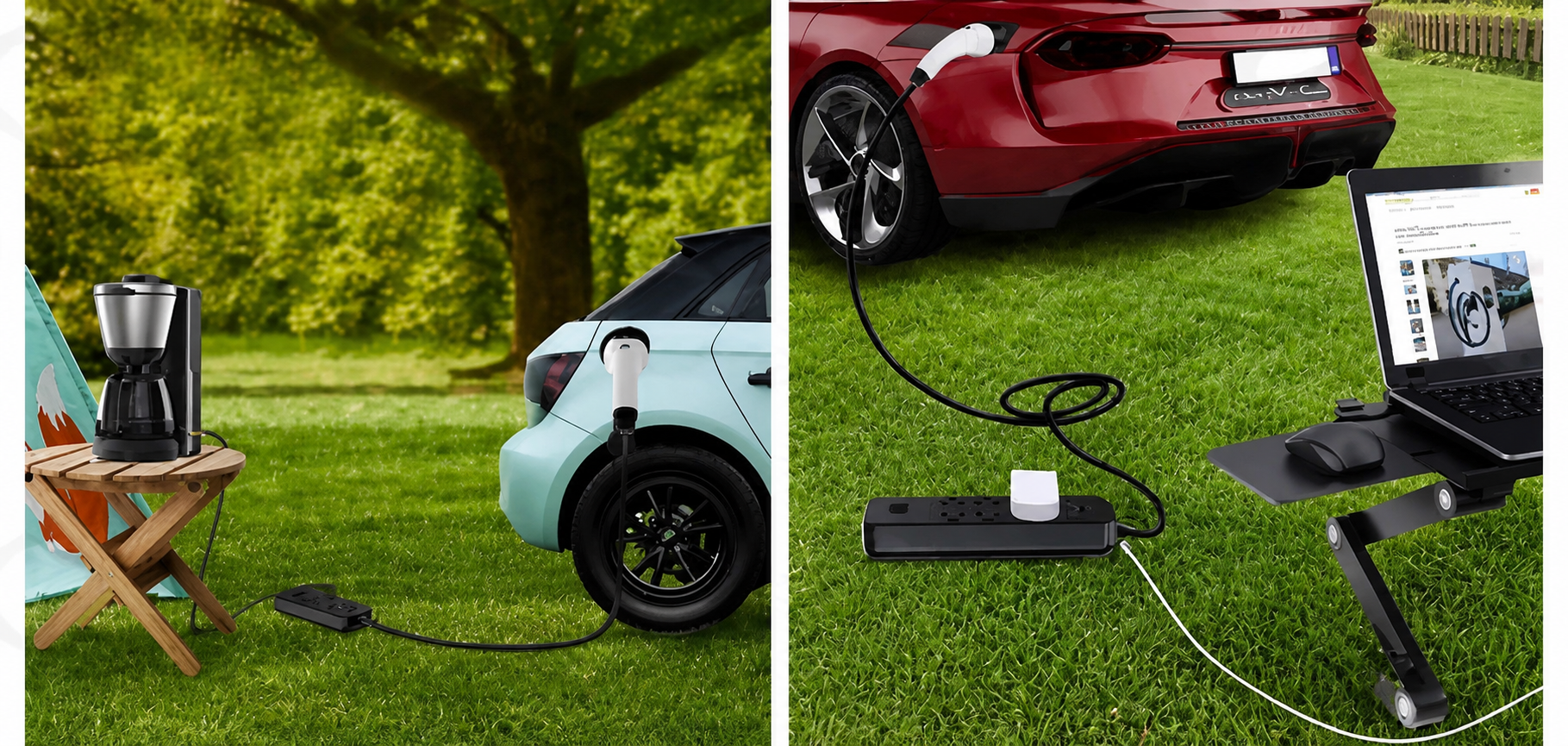
More importantly, its versatility goes far beyond expectations. It can easily power induction cookers, electric grills, and coffee machines. It can also provide stable electricity for projectors, camping lights, and portable refrigerators. Even power drills and small cutting tools can operate normally in outdoor settings. Power needs that once required careful planning can now be met simply by plugging in, allowing outdoor life to break free from the limitations of traditional electricity access.
Unlock Multiple Scenarios: A Better Way to Use Your EV
Refined Camping: Bring the Comforts of Home Into Nature
Imagine sitting around a campsite with family or friends, cooking hot pot, grilling meat, brewing fresh coffee, and enjoying an outdoor movie under the stars with a projector.
With V2L, you no longer need to worry about whether the campsite has an electrical outlet, nor do you need to endure the noise of a generator. The vehicle’s power output function can support multiple devices at the same time, such as an electric grill, electric kettle, and projector. Even in low-temperature environments, the battery management system helps maintain stable power delivery, making comfortable and well-equipped camping easier than ever.

Outdoor Work: Your Mobile Power Station
Outdoor construction, geological surveying, and film production often take place in remote locations with limited or no access to the electrical grid. Traditional power supply solutions can be inconvenient, expensive, and difficult to transport.
With Vehicle-to-Load (V2L) technology, electric vehicles can provide power for electric drills, surveying instruments, photography lighting, and other essential equipment, effectively serving as mobile power stations.
Photographers traveling to remote locations can recharge their drones, cameras, and lighting equipment without worrying about running out of power. Construction workers can operate compatible electric tools directly from their vehicles, reducing their dependence on conventional generators.
Compared with many portable power stations, EVs typically offer much larger battery capacities, potentially supporting longer working hours and improving operational efficiency.
Actual operating time depends on the vehicle’s available battery capacity, V2L output rating, and the connected equipment’s power consumption.
Emergency Power Supply: Reliable Backup When It Matters Most
During power outages caused by extreme weather, storms, or other emergencies, an electric vehicle equipped with V2L technology can provide valuable temporary electricity.
It can power essential household appliances, including:
- Refrigerators: Help preserve food during power outages.
- Lighting Equipment: Maintain visibility and improve safety.
- Internet Routers: Support essential communication when network services remain available.
- Mobile Devices: Keep smartphones and other communication equipment charged.
For households in areas vulnerable to severe weather, V2L technology can provide an additional source of emergency electricity.
During natural disasters, EV owners may also use their vehicles to charge mobile devices, provide temporary lighting, and support basic community needs.
Important Safety Note: V2L output is limited by the vehicle’s rated power capacity and available battery energy. It should not be treated as a guaranteed power source for life-support equipment such as ventilators or oxygen concentrators. Anyone relying on electrically powered medical equipment should use an appropriate, manufacturer-approved backup power system and follow their healthcare provider’s emergency power plan.
By combining transportation and portable energy storage, V2L-enabled electric vehicles offer practical benefits that extend well beyond everyday driving.
An electric vehicle is no longer just a means of transportation. With V2L technology, it can also become a versatile mobile power source for outdoor work, recreation, and emergency preparedness.
Safe V2L Power Supply: Essential Tips for EV Owners
Many EV owners worry that using Vehicle-to-Load (V2L) technology could damage their batteries or create safety risks. However, following proper operating procedures and the vehicle manufacturer’s recommendations can help ensure safe and reliable operation.
Here are four essential safety tips for using your EV as a mobile power station.
1. Match Your Equipment’s Power Requirements
Before connecting external devices, check your vehicle’s rated V2L output capacity.
To provide an additional operating margin, consider keeping the total continuous load below 80% of the rated output, where practical. Always follow the manufacturer’s specified limits.
For example, if your vehicle supports a maximum V2L output of 3.3 kW, keeping the continuous load around 2.6 kW can provide additional headroom.
Avoid simultaneously starting multiple high-power appliances, as their combined startup currents may trigger overload protection.
2. Maintain Sufficient Battery Charge
Before using V2L, check your vehicle’s battery State of Charge (SOC) and estimate how much energy your connected equipment will consume.
Maintaining a battery reserve of approximately 20%, or following your vehicle manufacturer’s recommended discharge limit, can help preserve sufficient driving range.
Some plug-in hybrid vehicles may support additional battery charging through their internal combustion engines. However, this functionality varies by model and should only be used according to the manufacturer’s instructions.
3. Follow Proper Operating Procedures
Safe operation is essential when using an EV as an external power source.
Follow these basic precautions:
- Park your vehicle securely and engage Park (P) mode when required by the manufacturer.
- Connect compatible V2L equipment according to the vehicle’s operating instructions.
- Before disconnecting, switch off connected appliances and deactivate V2L mode.
- Disconnect the V2L adapter only after power output has stopped.
- Avoid operating electrical equipment in standing water or other hazardous environments.
For outdoor applications, choose equipment with an appropriate ingress protection (IP) rating for the intended conditions.
An IP54 rating provides limited dust protection and resistance to splashing water, but it does not make electrical equipment waterproof or safe for use in standing water.
4. Choose Certified and Compatible V2L Equipment
Always prioritize manufacturer-approved V2L adapters, charging accessories, and power distribution equipment.
For third-party accessories, verify compatibility with your vehicle and compliance with applicable electrical safety regulations and certification requirements in your market.
Avoid low-quality or uncertified electrical accessories that may increase the risk of overheating, short circuits, electric shock, or equipment damage.
Safety Reminder: V2L functionality, output capacity, electrical protection, and operating procedures vary between vehicle models. Always consult your vehicle’s user manual before connecting external equipment.
Conclusion: Unlock the Full Potential of Your EV
Vehicle-to-Load technology has evolved far beyond powering a few appliances during camping trips.
It connects everyday life with outdoor adventures, provides convenient electricity for remote working environments, and offers an additional source of temporary power during emergencies.
With the right equipment and proper safety precautions, your electric vehicle can become much more than a means of transportation.
Your EV doesn’t just take you further. It can also bring electricity wherever your adventures lead.
Make the most of your vehicle’s V2L capabilities and discover a more flexible, convenient, and connected outdoor lifestyle.
